
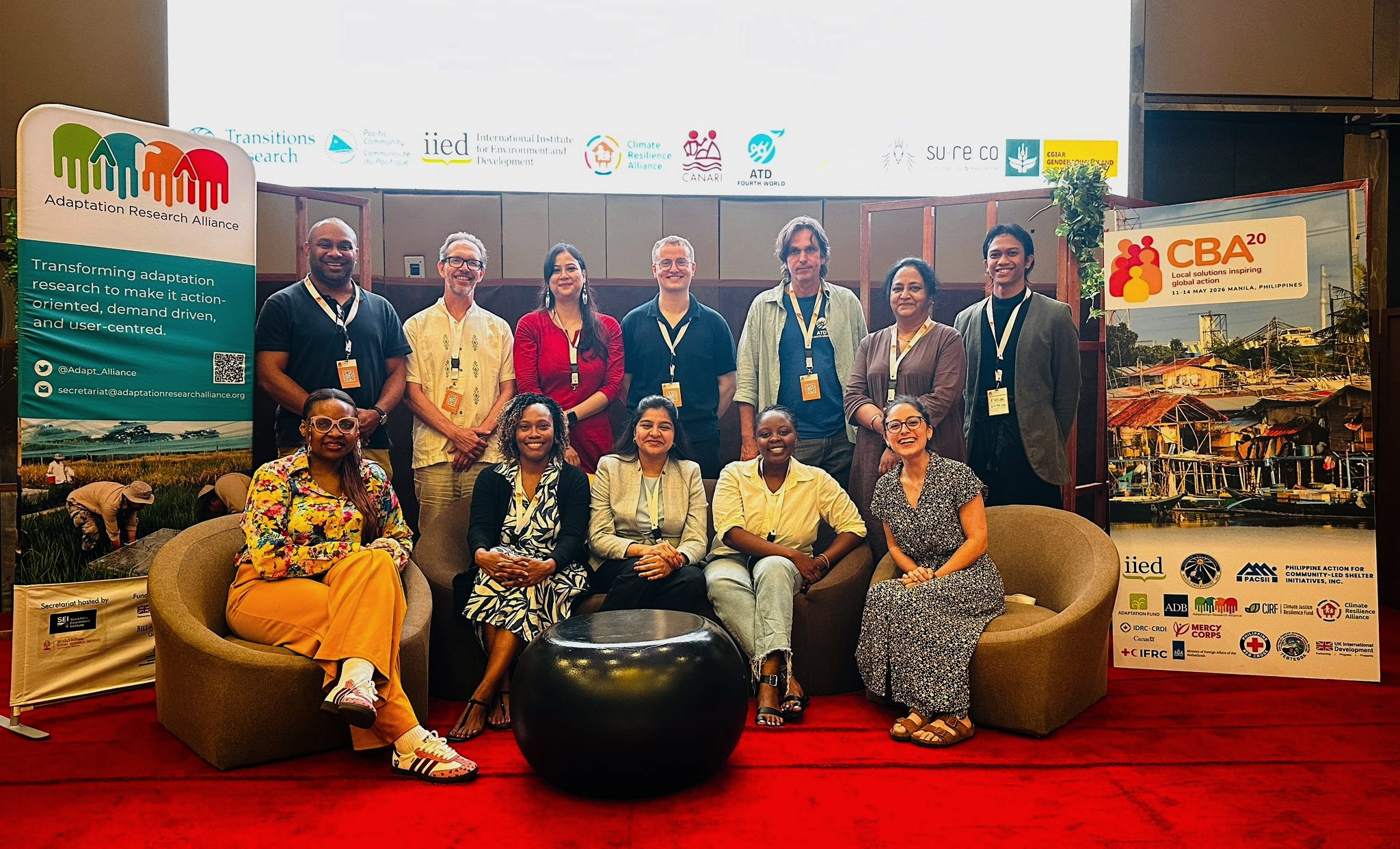
The 20th annual International Community-based Adaptation Conference (CBA20) brought together practitioners from across the globe last week under the theme “local solutions inspiring global action.” UNDERPIN contributed to this milestone 20th edition, engaging in conversations on how locally grounded knowledge can inform climate adaptation measurement. .
On 12 May, Adaptation Research Alliance hosted discussions around the “knowledge nexus,” a key theme of CBA20, exploring how different knowledge systems can be combined with climate science. As part of this, IIED Europe brought in UNDERPIN’s perspective to the session “Who decides what counts and matters in locally led adaptation? Indicators, Emerging Technologies, and Local Knowledge.”
Indicators, technologies, and local knowledge for locally led adaptation
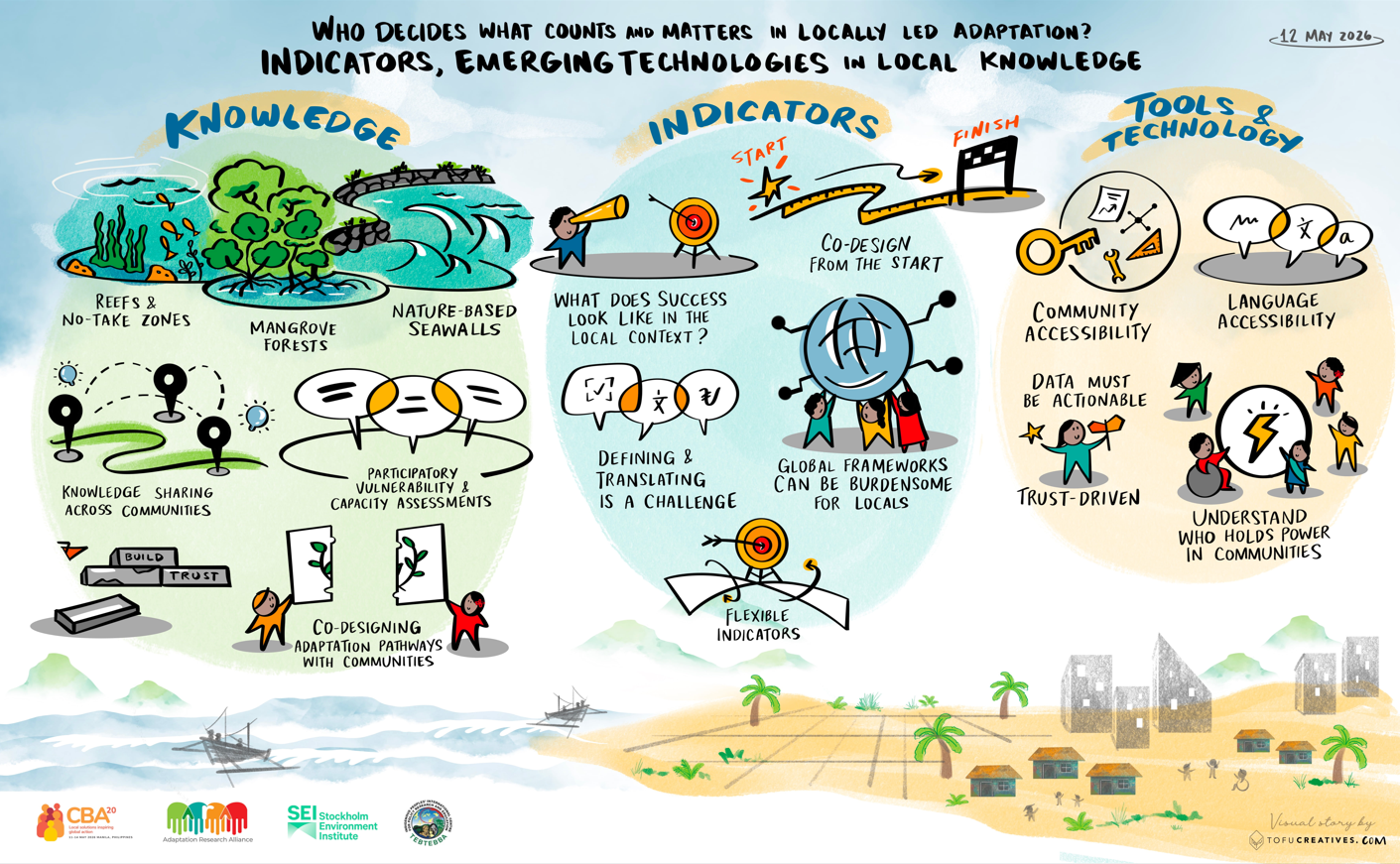
The session highlighted how locally led adaptation (LLA) is shaped through the interaction of local, Indigenous, scientific, and experiential knowledge. IIED Europe, on behalf of the UNDERPIN project, contributed to the section of the session on climate adaptation indicators and led discussions on topics such as how to integrate local knowledge and experiences into climate adaptation measurement.
As part of their presentation, IIED Europe drew on two examples of how the Normandy and Kosice regions have already used citizen science methods in how they have monitored climate adaptation impacts.
Košice’s Climate Feelings Map initiative for Heat Planning
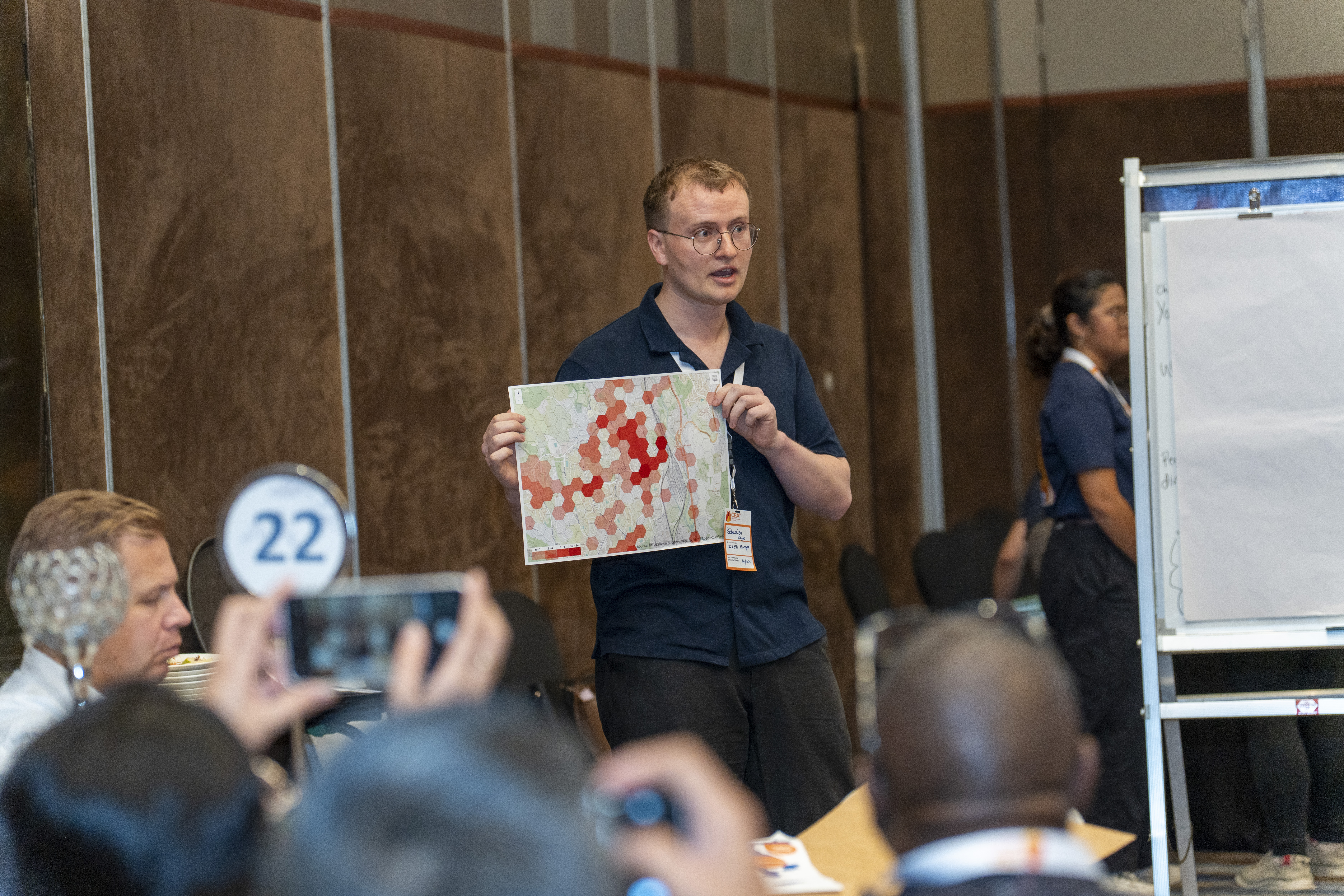
In 2019, Košice, Slovakia ran a ‘climate feelings map’ initiative where residents from community groups, schools, and city-owned organisations were invited to share their experiences of heat across the city. Residents reported two things using an online tool: first, their perceptions of how hot it was and second, problems they perceived in public spaces and what they felt was missing, such as shade or green areas. This input turned into a city-wide map showing where people experience the most heat. Importantly, this wasn’t just an exercise in data collection – the results were directly used to shape Košice’s climate adaptation plan in 2021 – helping the city target action where it is most needed.
Normandy’s Coastal Observation Network & Erosion Monitoring
The second example presented was from work conducted in Normandy in France. Here, the Coastal Observation Network enables citizens to monitor erosion by acting as first responders who document storm damage to cliffs and dunes. Using a smartphone app, volunteers can take photo records of beaches, helping the Coastal Observation Network monitor coastal erosion over time.
Interestingly, in some coastal areas of France, such as Normandy, World War II bunkers and fortifications can act as visible historical reference points that help people understand and communicate long-term coastal change. Because these structures are fixed features in the landscape, local residents may remember how their position related to cliff edges or shorelines in the past – for example, recalling that a bunker once stood much farther from the cliff edge than it does today. These memories can provide useful contextual information about how coastlines have changed over time and can complement scientific observations of coastal erosion.
The UNDERPIN project seeks to build on some of these existing examples of the use of citizen science in climate adaptation to integrate such methods into the climate adaptation indicator work the project is developing.
Using integrated knowledge systems to measure adaptation
Building on these insights, UNDERPIN also engaged in group discussions, exploring both the challenges and opportunities of measuring adaptation through integrated knowledge systems, particularly the role of participatory and experiential approaches in capturing what truly matters at the local level.
Discussions highlighted:
The challenges arising from applying global adaptation indicators to the local level. Contextualizing indicators to the local setting may require going back to the very basics of what communities need.
The importance of citizen involvement in determining what successful adaptation looks like in practice – a local person may have a different understanding of successful adaptation than a scientist.
Moving from surface level consultation to more meaningful involvement and co-design with local communities was also emphasised by participants as an important part of participatory approaches to developing climate adaptation indicators.
Citizen science and community involvement in the generation and collection of adaptation data was also highlighted by participants as important.
Project Outlook: Citizen Science & Outcome Indicators
Looking ahead, UNDERPIN will continue working closely with four pilot regions across Europe to co-develop and validate an outcome-oriented indicator framework for measuring adaptation effectiveness. As part of this indicator work, the UNDERPIN project will seek to integrate insights using citizen science approaches as well as to learn from what already works in regions and communities around Europe and the world. This work draws on diverse data sources, including insights generated through community knowledge and participatory approaches.
The International Community-based Adaptation Conference (CBA20) was organised by International Institute for Environment and Development (IIED) in partnership with Manila Observatory, Philippine Action for Community-led Shelter Initiatives, Inc, Adaptation Research Alliance, and additional partners. The session that the UNDERPIN project contributed to, was organised by 10 other research and practitioner organisations including Transitions Research, Mercy Corps and Sustainability Research.
In the coming months, UNDERPIN will remain actively engaged in key international fora, including the European Urban Resilience Forum (EURESFO) in Portugal and a joint meeting hosted by the European Space Agency and the Joint Research Centre in the United Kingdom. Stay tuned.